Sight Reading Practice: A Simple 10-Minute Routine
Build a useful sight reading practice routine in ten minutes. Learn what to preview, how to handle mistakes, and which tools fit your next music session.

Written by Kevin Christensen
You can spend weeks polishing a piece and still feel lost when someone puts a new score in front of you. Sight reading practice needs a different goal: make sense of unfamiliar music, choose a workable pace, and reach the end without turning every slip into a restart.
You don't need a huge stack of difficult scores to begin. Start with short examples you can manage, a clear task, and a way to notice what went wrong. Our sight-reading tools category can help you find fresh material and focused exercises. Here's a practical ten-minute routine, plus advice on choosing tools without confusing note-name drills with reading actual music.
What sight reading practice should train
Sight reading means performing written music you haven't prepared in advance. In a practice session, that involves more than naming notes. You're also reading rhythm, finding your place on the instrument, noticing musical instructions, and keeping your place in the score.
Separate two useful activities:
- First-read practice: preview unfamiliar music, then make one continuous attempt.
- Repair practice: stop afterward and work on a rhythm, fingering, interval, or other problem you found.
Both matter. But replaying the same eight bars until they're polished isn't the same task as reading a new eight-bar example. Keep some unfamiliar music for the next first attempt.
Choose material below the technical difficulty of the pieces you're currently learning. As a practical test, ask: can you play the notes and patterns comfortably when you aren't also decoding a new score? If not, simplify the reading task.
For a beginner, that might mean four bars using a small note range. A more experienced player might read a short passage with familiar rhythms but an unfamiliar key. The point is to isolate a reading challenge, not test every skill at once.
A ten-minute sight reading practice routine
Treat these timings as a starting framework, not a proven formula or an exam rule. Shorten the session when your attention slips, and spend longer on a step if it reveals a useful problem.
Minute 1: Choose one target
Pick a narrow goal, such as following quarter-note rests, noticing accidentals, or reading bass-clef notes in a familiar register. Avoid combining a new clef, wide leaps, and difficult rhythms in the same first exercise.
Write a one-line target: “I'll keep counting through the rests.” That gives you something specific to review later. For help fitting this into a wider session, see our guide to practicing music effectively.
Minutes 2–3: Preview the whole example
Before playing, check:
- The clef, key signature, and time signature.
- Your starting note or hand position.
- Rests, accidentals, repeated patterns, and large jumps.
- Dynamics, articulation, and any change near the end.
Tap or count the most awkward rhythm. Choose a pace that leaves room to read it, rather than a pace that only works for the easy opening.
This preview has a clear musical purpose. ABRSM's Piano Sight-Reading Trainer specifically includes work on scanning music and recognizing its key features before playing. You can use that idea without following an exam syllabus.
Minutes 4–5: Make one continuous attempt
Count yourself in and play the short example. Aim to keep the pulse moving. If you miss a note, try to find the next beat or phrase rather than returning to the beginning.
If you're completely lost, stop safely and choose an easier example. “Keep going” is a practice target, not a reason to force your way through music you can't yet follow.
A metronome can provide a reference, but it shouldn't turn the session into a race. Our guide to common metronome mistakes covers starting too fast and restarting after slips.
Minutes 6–8: Repair one problem
Now switch modes. Stop, isolate the difficult spot, and work on it slowly.
If the rhythm caused trouble, count or clap it without the pitches. If you lost a note after a leap, identify the two notes and practice that movement. For singers, check the starting pitch and work through the interval before putting the phrase back together.
Don't try to fix everything. Choose the issue that most disrupted the attempt. You're using the first read to decide what deserves attention.
Minutes 9–10: Read a fresh example and leave a note
Choose another short example with similar demands. Preview it, then make a new first attempt. Don't expect perfection just because you repaired one problem in the previous exercise.
Finish with one observation: “I counted the rests, but rushed the last two bars.” Keep the tempo and difficulty roughly comparable when you review future sessions. Otherwise, an easier example can look like progress even when you've changed the task.
Choose a tool that matches the reading problem
An app can supply material or test a specific skill. It doesn't need to do everything. These three listed tools serve different parts of the routine, rather than forming a best-to-worst ranking.

Develop speed and accuracy in reading sheet music with timed sessions. Practice treble, bass, and alto clefs, track progress, and enhance your musical skills.
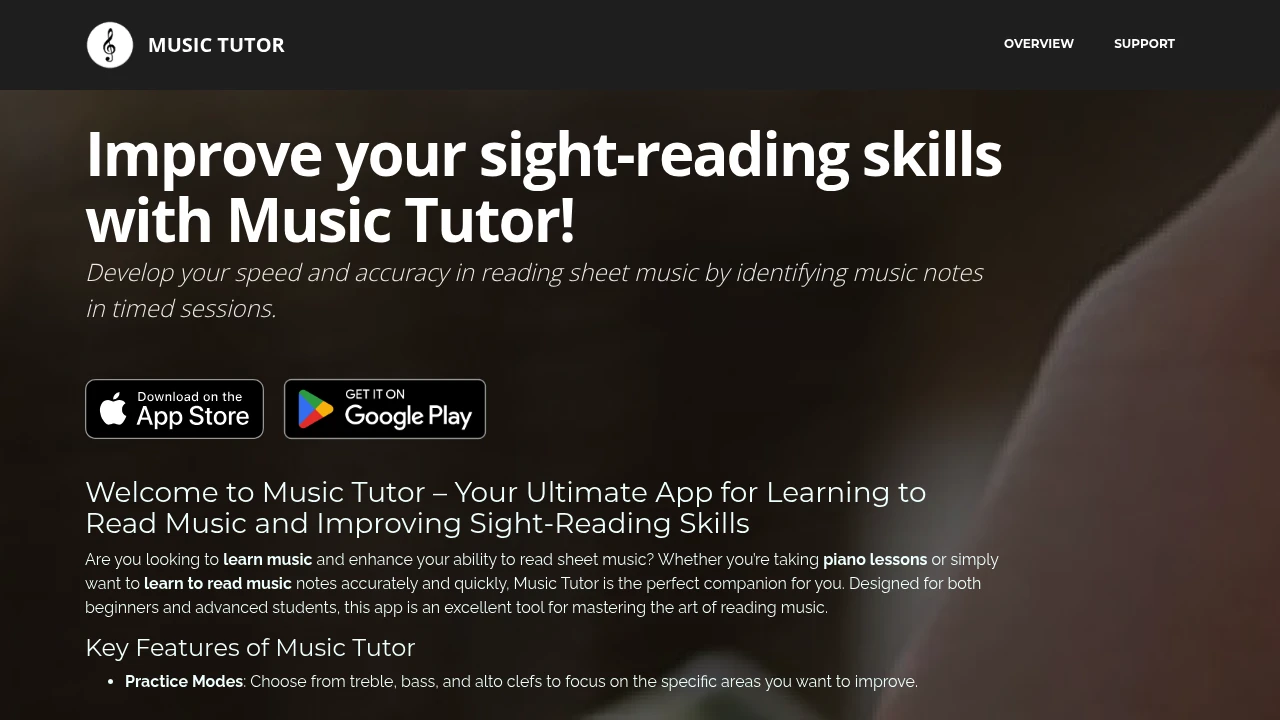
Music Tutor offers timed note-reading sessions in treble, bass, and alto clefs, with an adjustable note range. Use it for a short note-recognition drill when decoding individual pitches is the main obstacle.
Its official feature page also describes mistake review and progress tracking. Keep the distinction clear: identifying a note on a screen is a narrower task than playing a phrase with rhythm and expression. Follow the drill with actual music on your instrument.

Practice sight reading and singing with unlimited, instantly generated exercises. Customize difficulty, get instant feedback, and improve skills on any instrument.

Sight Reading Factory generates new exercises for instruments and voice, with controls for difficulty and musical content. It fits the fresh-material part of the routine when you want to target a particular range or rhythm.
The provider's feature overview describes controls for rhythms, range, leaps, accidentals, dynamics, and articulation. Start with a simple setup, then change one demand at a time. Check the current access options before choosing it for a class or ensemble.

Practice sight reading with your MIDI keyboard directly in the browser. Generate custom exercises to challenge your skills. Start practicing for free.
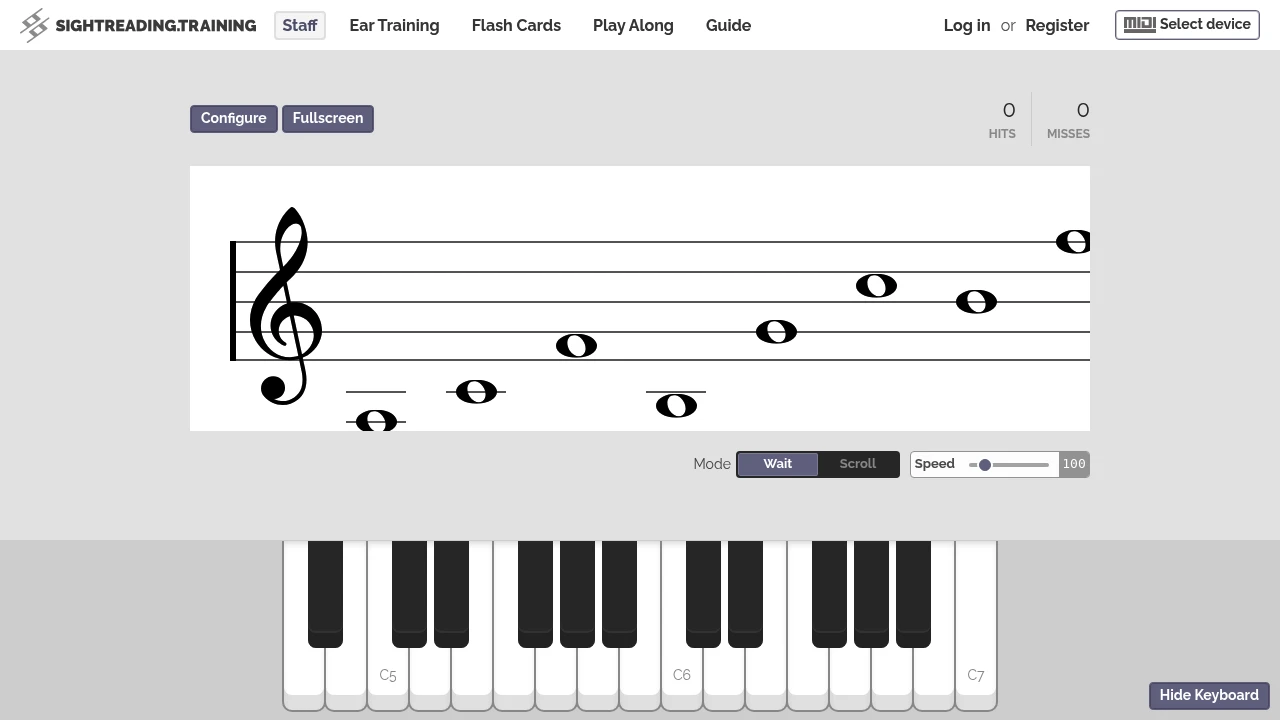
Sight Reading Trainer provides randomly generated notation in a browser and supports practice with a MIDI keyboard. It suits keyboard players who want a focused way to connect written pitches with the keys they play.
Its official guide recommends using a MIDI keyboard and notes that entering multiple notes at once requires one. It also explicitly advises using real sheet music alongside the app. Check your browser and device setup before relying on it for a lesson.
Choose the tool by the bottleneck: note recognition, fresh musical passages, or keyboard response. You don't need to use all three in every session.
Adapt the routine for your instrument or ensemble
Piano and keyboards: If two staves overwhelm you, begin with a simpler score or a single line. Treat hands-separate work as preparation, then choose manageable two-hand music for the combined reading task. Avoid judging your general reading ability from one difficult texture.
Wind, brass, and strings: Keep the first examples within a comfortable playing range. Preview breaths, bowing, or articulation where relevant. If the technical demand prevents you from following the score, reduce it before adding another reading challenge.
Singers: Establish the starting pitch and tonal context before you begin. If finding pitches is the obstacle, separate pitch work from rhythm briefly, then reunite them in a short phrase. Don't assume a note-naming app measures your ability to sing that phrase.
Bands, choirs, and teaching groups: Agree on the starting tempo and the length of the first read. Use a short passage everyone can reasonably attempt. Afterward, ask each player to name one reading problem, then choose a shared target for the next example.
For any instrument, distinguish the task you're practicing. Reading a chord chart, following drum notation, and singing a melody make different demands. Pick material that resembles the kind of reading you actually need, rather than chasing a high score in an unrelated drill.
Build a reading habit you can assess honestly
Start with one short, unfamiliar example and a question you can answer afterward. Did you keep your place? Did you notice the rests? Could you recover after a missed note? Those observations give your next session a purpose without turning every attempt into a pass-or-fail test.
Keep the reading task separate from the repair work. The first attempt shows you what happens under unfamiliar conditions. The slower work afterward gives you time to solve a problem. Your next fresh example is a chance to try that approach again, not a guarantee that the problem has disappeared.
Choose tools for the support you need. A note-reading drill can target hesitation over pitches. A generator can provide unfamiliar passages. A MIDI-based exercise can connect notation with keyboard input. None of those makes listening, phrasing, or working with a teacher unnecessary, and an app score doesn't describe your whole performance.
For your next session, choose a comfortable range, familiar rhythms, and one clear target. Set aside ten minutes if that feels manageable, but don't treat the duration as a requirement. Record the difficulty and a brief observation so you know what you're comparing next time.
The aim isn't to prove that you can survive the hardest page available. It's to make the next unfamiliar page a little less mysterious, while keeping the work musical, specific, and realistic for where you are now.